



























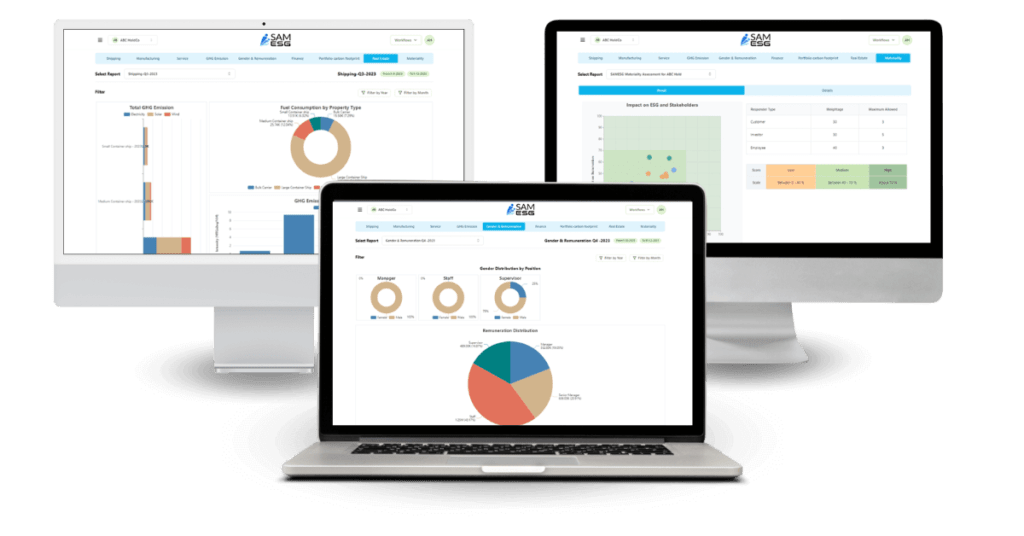
From farm to fork, SAMESG® helps agriculture and food businesses turn complex ESG data, regulations, and Scope 3 value‑chain impacts into clear metrics, targets, and disclosures.

We strengthen enterprises through technology and services to deliver targets, grow sustainably, and build stakeholder confidence across sectors.


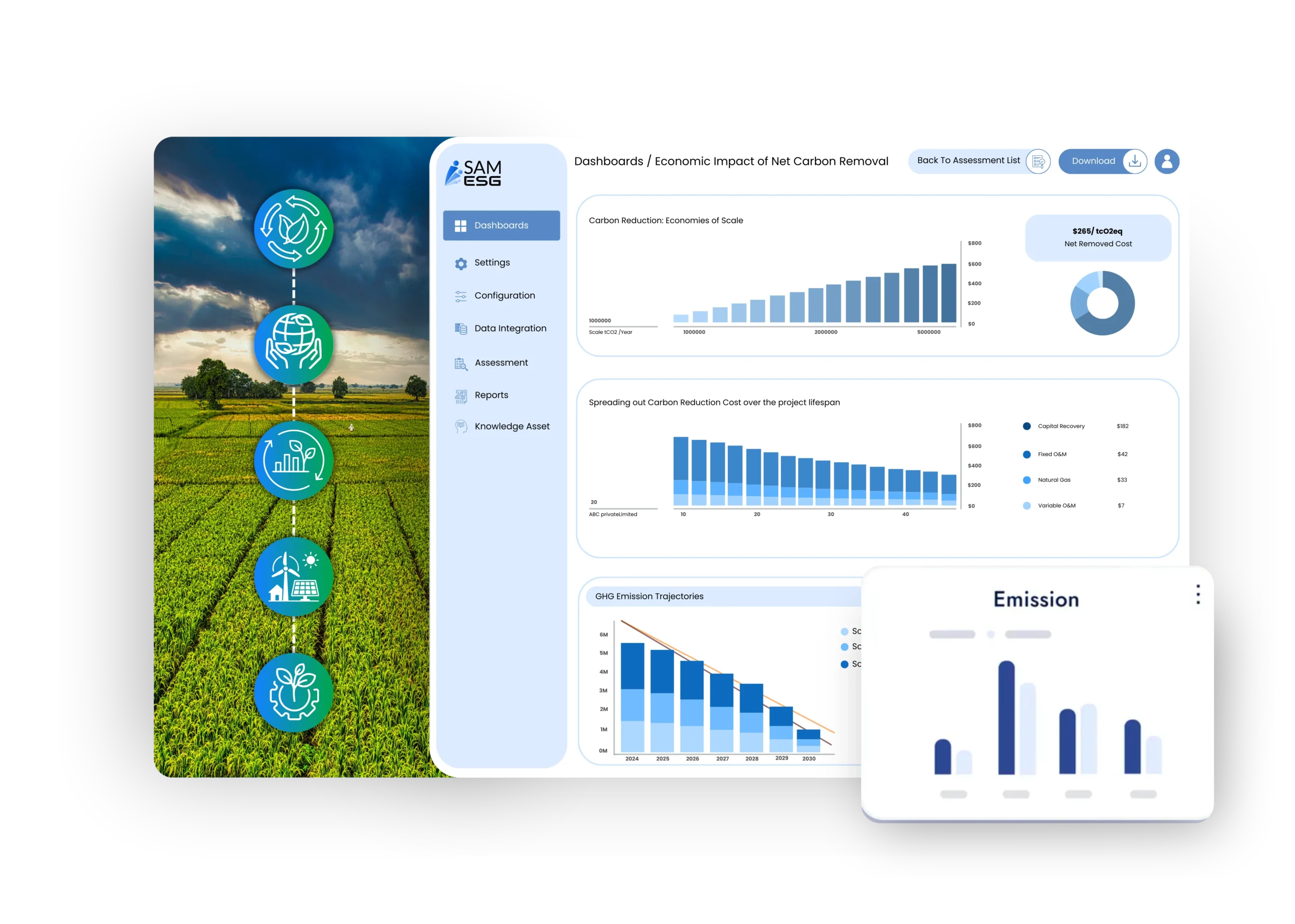
SAMESG® unifies data so you can track the most relevant sustainability indicators.
Monitor climate and land‑use impacts.
Track water use in crops and regions.
Follow key soil and habitat signals.
Capture conditions for farmers and suppliers.
Run a quick diagnostic to benchmark your policies, data, controls and disclosures against emerging ESG expectations for the agri‑food value chain.

A lighter way for agri‑food SMEs and suppliers to start credible emissions reporting without the complexity of a full ESG stack.

Standardized emission templates
Pre‑built Scope 1, 2, and 3 emission templates
Automate emissions calculations with conversion factors
DEFRA-based calculations
Self‑certified emission summaries for stakeholders
Ready-to-share reports
Quick and guided implementation and onboarding
Fully cloud-based
SAMESG® helps you organize information to respond to global sustainability reporting standards and sector expectations affecting agricultural value chains.
Report material climate and ESG information across their operations.
Visibility into impacts and risks from farms to finished products.
Key markets restrict products linked to deforestation or poor land-use.
Policies link ESG with food safety, worker protection, and community impacts.
Agriculture and food companies worldwide now face stricter ESG disclosure obligations, as regulations and standards tighten expectations across global supply chains.
Retailer and brand requirements
Food retailers and consumer brands increasingly ask producers for verified data on climate, water, biodiversity, and animal welfare before purchasing.
Investor and lender expectations
Financiers are incorporating climate, deforestation, and social risks into their decisions, influencing access to capital for agri‑businesses.
Regulation and disclosure rules
Emerging ESG and climate reporting requirements call for better data on land use, emissions, and working conditions in agriculture supply chains.
Climate and nature risk
Droughts, floods, soil degradation, and deforestation create material risks for yields, input costs, and long‑term land productivity.
Consumer and civil society pressure
Customers and NGOs are scrutinizing issues such as deforestation‑linked commodities, fair labor, and the treatment of smallholders.
Digital traceability expectations
Buyers and regulators are increasingly expecting end‑to‑end traceability for agri‑commodities, with digital systems to verify origin, production practices, and ESG claims.
Configure SAMESG® to your crops, geographies, and business models, from cooperatives and producers to processors, brands, and distributors.
Identify which environmental, social, and governance topics are most significant for your crops, regions, and stakeholders.
Map ESG impacts and dependencies from inputs and farm production through storage, processing, and distribution.
Connect material topics and boundaries to the disclosure requirements of global and regional ESG and climate frameworks.
Define the ESG indicators and standardize them across entities, business units, and locations.
Calculate Scope 1 and Scope 2 emissions and support Scope 3 assessments using recognized methodologies.
Use AI to assist with extracting, checking, and reviewing ESG data, highlighting anomalies and potential gaps.
Access the latest insight on ESG regulations, metrics and best practices for agriculture and food businesses.
For many small and medium enterprises, ESG reporting is treated as an administrative…
If you work in ESG or sustainability reporting, 2026 is probably the year…
The role of Environmental, Social, and Governance (ESG) is becoming indispensable for organizations…
Sustainability reporting is already established across SGX-listed companies. IFRS S2 introduces a different…
The UK Sustainability Reporting Standards (UK SRS) represent the latest evolution in the…
Double materiality has redefined materiality, moving it beyond a narrow reporting filter to…
This facilities management organization operates across multiple service lines including logistics, operations, and…
Operating across the UAE, Egypt, and the Kurdistan Region of Iraq, this regional…
A leading Tropical Coast exporter replaced fragmented manual processes with SAMESG®, automating MITECO…
The European Commission has issued new guidance on packaging rules aimed at reducing…
China has adopted a comprehensive Ecological and Environmental Code, bringing multiple environmental regulations…
The Global Reporting Initiative has introduced proposed pollution disclosure standards to improve how…
Get a tailored platform to simplify compliance, unlock better data, and support credible sustainability claims across your value chain.

Switch to a simpler way to calculate and report your emissions with SAMESG® Lite
Log In
Upload Data
Calculate Emissions
Download Reports