 IN
IN
 SG
SG
 ES
ES
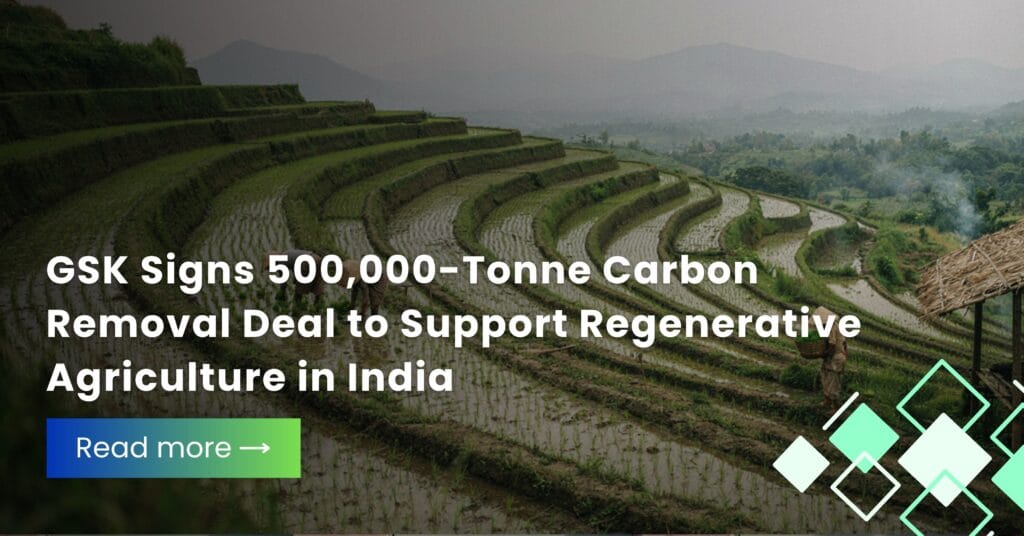
Global biopharmaceutical company GSK has signed an eight-year agreement with carbon-removal developer Varaha to purchase more than 500,000 tonnes of carbon-removal credits generated through a regenerative agriculture project in northern India.
The agreement will support the expansion of the project across approximately 50,000 hectares of farmland in Punjab and Haryana. The initiative is designed to reduce greenhouse gas emissions from agricultural activities while increasing carbon storage in soils.
The project supports smallholder farmers in shifting away from conventional practices such as crop-residue burning, intensive tillage and flood-irrigated rice cultivation. Alternatives include direct-seeded rice, reduced tillage and incorporating crop residues into the soil.
Beyond carbon removal, the project is expected to deliver wider environmental and social benefits. These include reduced air pollution from crop-residue burning, lower water consumption and additional income opportunities for participating farming families.
During its first monitoring period across 42,000 hectares, the project reportedly avoided approximately 4,574 tonnes of fine particulate matter emissions from crop-residue burning and saved around 59.5 billion litres of water. Participating households also recorded a reported 12% to 16% increase in average income during the monitoring period, supported by factors including lower fertilizer costs, improved yields and carbon-credit revenue sharing.
The agreement is expected to generate around 100,000 tonnes of carbon-removal credits annually between 2028 and 2033. For GSK, the procurement forms part of its broader strategy to address residual emissions while progressing toward its science-based net-zero target.
The development highlights the growing role of carbon-removal projects that combine climate action with nature and community benefits. It also demonstrates how long-term corporate purchasing commitments can help provide financing for regenerative agricultural practices and encourage their adoption among smallholder farmers.
As demand for high-quality carbon removal continues to develop, projects that can demonstrate measurable climate outcomes alongside improvements in soil health, water efficiency, air quality and farmer livelihoods could become increasingly important within corporate climate strategies.